A Note on Method
Usage of AI (artificial intelligence) in Genealogy is still in its infancy. This blog not only tells Isabella Smyth’s story but uses AI to deepen her narrative — still grounded in evidence — by examining the relationships between Isabella and the wider circle of early Jamestown leaders. Nonetheless, AI can’t make up for the lack of existing records. Recognizing this, all Claude AI output (Part 2 only) was fact-checked against primary sources, especially given AI provided many non-primary references even though requested to do so. Though few issues were found, items marked * and ** represent AI errors or imprecisions allowing a full copy of AI’s responses while not ignoring inaccuracies.
Introduction
In September 1626, a woman named Isabella Perry stood up in Virginia’s General Court and challenged a neighbor accused of witchcraft to defend herself publicly. She did not merely testify — she coached, she pressed, she used the authority of her social position to shape the outcome. That woman was Isabella Smyth, my 10th great grandmother, and almost nothing else she ever said was recorded1.
In researching her story I have come to know much about where she lived, what land she purchased and when, her marriages and children, court cases in which she testified, and more. Though the documented records are seriously incomplete for this early Virginia timeframe, along with the reality that generally women were not writers nor chroniclers of their own life, one can find historical patterns and relationships that seem to have meaning. Still, taking those clues and turning them into a more complete life story is a stretch, especially using strict genealogical standards of evidence. And then comes AI. Of course, AI can’t make up for missing records. But it can find, organize and help connect and offer explanations to the pieces of evidence that do exist.
Therefore, this is a story in two parts. The first part is Isabella’s life story from when she initially left England until her death in Virginia as revealed through classic genealogical research of primary and secondary records. This first part was necessary learning in order to ask AI intelligible questions and provide a solid background in understanding Isabella’s Virginia story. The Part 2 takes advantage of this researched foundation but now leveraging AI to unveil where possible the meaning of the patterns and events woven throughout Jamestown’s historical records thereby supporting the creation of a more nuanced and plausibly a more complete portrayal of Isabella’s life story.
Part 1: Isabella’s life story, based upon classic genealogical research
Isabella and her first husband, Richard Pace

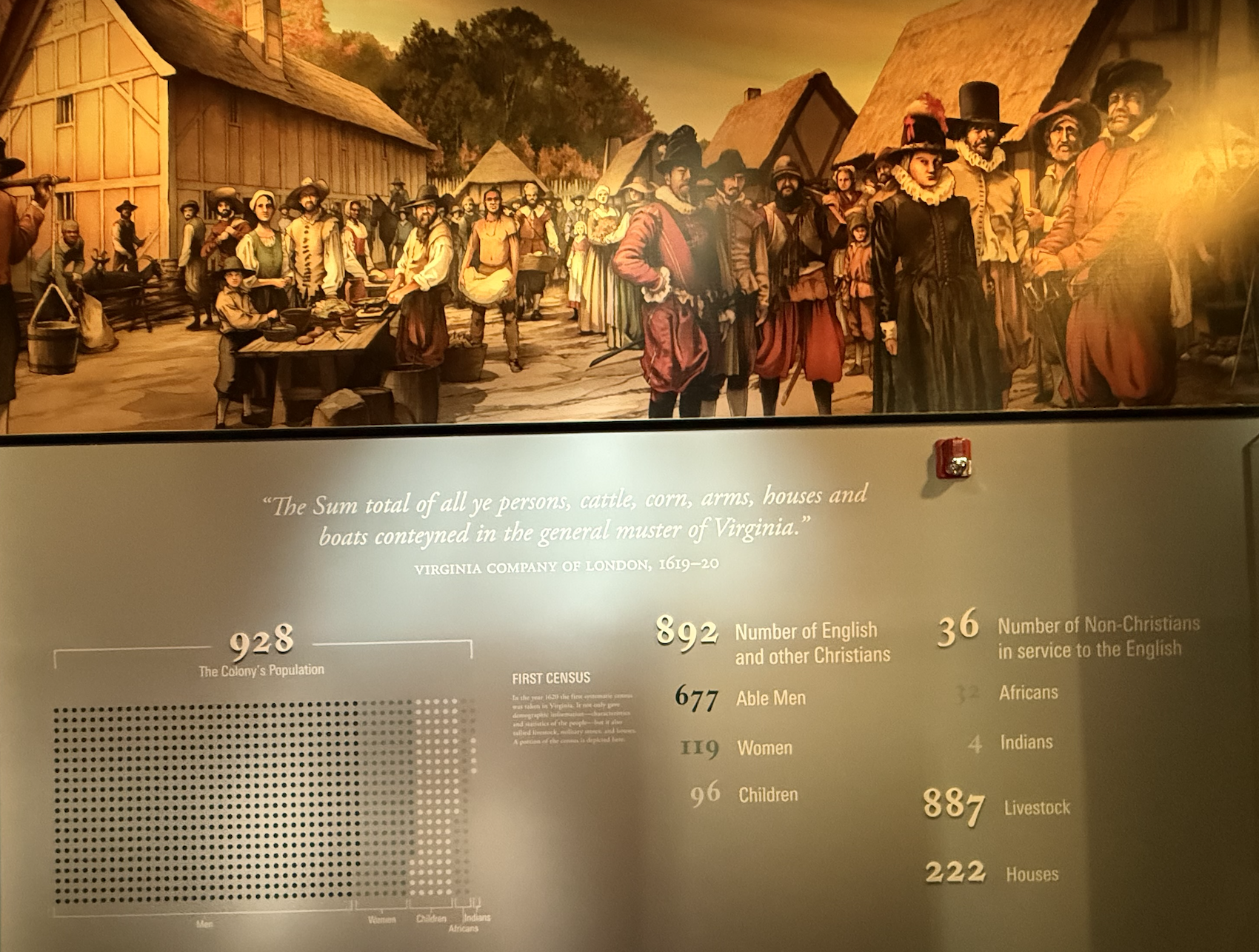
In the early 1600s Jamestown women settlers were a rarity. In fact, the first three sailing ships that arrived in 1607 had no women on them at all. Gentlemen, craftsmen, apprentices, indentured servants and laborers were the first English settlers of Jamestown – all men. 2 Nevertheless, by the muster roll (similar to a census) of 1619/20 there were 976 white settlers with women approaching 11% of the total and children approximately 10%. Isabella Smyth was one of those women.3 Richard and Isabella arrived in Jamestown with their son George Pace sometime between 1611 and 1616.4 Both Isabella and her husband, Richard Pace, were designated as “ancient planters” and granted 100 acres each for their personal adventures. With these grants Richard and Isabella established one of Jamestown’s early plantations on the south side of the James River called Pace’s Paines.5

Little of Richard and Isabella’s life in England is known. However, we do know Richard was a carpenter by trade, so one would assume he was considered a middling class for the times. 6
The middling class was characterized by their literacy, strong work ethic, and ability to employ servants but financially below the wealthy landed gentry but above the impoverished laboring poor. Nevertheless, if Richard’s carpentry work was their only means it is difficult to surmise how they could have funded their travel to Jamestown, let alone become investors in the Virginia Company of London, which they were (for example, one journey to Jamestown would have been approximately a year’s wage for a typical London carpenter in the late 1500’s).7 In addition, they both demonstrated incredible courage by taking on such a high risk quest. So why they decided to take on such an adventure, how they funded their journey to Jamestown, or how they managed the many start-up costs associated with establishing a plantation is not known. But they did.

What we do know about Richard and Isabella is that they married at St Dunstan & All Saints Church, Stepney, Middlesex, England in 1608.8 Their son George was likely born around 1609 given he was still in his minority in 1628, though no baptismal record has been located.9 The first record of the Pace’s in Jamestown was in 1620 regarding their patent of Pace’s Paines that drew on the early colony’s headright system.
Ancient Planters who had arrived before 1616 received 100 acres for their own personal adventure — double the standard headright of 50 acres — plus 50 acres for each additional person whose passage they paid.10 We also know that Richard Pace died after the Jamestown Indian Massacre in 1622 but before Isabella remarries to Captain William Perry in 1623/4, a known associate and likely friend of theirs from England and their Jamestown next-door neighbor (Perry’s Point was Captain William Perry’s physically adjacent plantation to Paces Paines).11 12
Before Richard Pace saved Jamestown with his early warning regarding the Indians’ plans, both Richard and Isabella sail back to England and are somehow involved in or close to the plan to bring young, marriage eligible women to Jamestown (sometimes referred to as the Jamestown Brides).13 The plan was commissioned by the Virginia Company of London in 1619 with the objective of addressing a known problem with the colony — few marriageable women creating a sense of impermanence and instability in the colony. In fact, one of the Jamestown Brides was “Richard Pace’s kinswoman, Ursula Clawson”.14 We don’t know if Richard and/or Isabella were actively involved in this potential solution to Jamestown’s instability (Sir Edwin Sandys proposed this direction15). However, we do know they were on the first ship, the Marmaduke (a merchantman vessel), bringing many of these young women to Jamestown in 1621.16 Minimally one could imagine Isabella providing these women with a female’s view of Jamestown while comparing it with life in England during their multi-week sail to Virginia.


The fact that her husband, Richard Pace, learned about the impending Jamestown Indian Massacre in 1622 from the Indian Chanco living near or with his family, then rowed across the James River and warned Jamestown leadership of the planned attack (saving the lives of hundreds in Jamestown)17 tends to overshadow much else of what occurred, especially to and with Isabella. However, this was just the beginning of Isabella Smyth’s adventures.
Early Jamestown was a tough place. Wilderness, disease, hostile relations with the Powhatan Confederacy, fear of a Spanish attack, continuous new English arrivals, the expectation that Jamestown would make the English immigrants wealthy – and their London financiers very wealthy – all added to the hardships, pressures and adaptations Jamestown settlers experienced. While not delving into the multiple financial, governmental and societal approaches the Virginia Company of London and the English Royal Crown attempted towards making Jamestown successful, it is clear Isabella was intimately connected to Jamestown’s early leaders, events and hard-fought successes.
Isabella and her second husband, Captain William Perry
After Richard Pace’s death between March 1622 and May 1625, most likely 1623–1624, Isabella sailed to England with her son George.18 After her return to Jamestown she married Captain William Perry, their neighbor and one of her deceased husband’s close business partners.19 In fact, near the time of Richard Pace’s death he and Perry had planned to establish another plantation but this time along the Chickahominy River, a tributary of the James River.20 Due to Richard’s untimely death those plans never came to fruition.
In the early years of their marriage Captain Perry became the House of Burgesses representative from Pace’s Paines and, later, Smyth’s Mount.21 Prior to this, Perry is one of five men to make the case to the Virginia Company that they needed relief as follows, “Shortly after the 1622 Powhatan attack, he returned to England on business for the colony. He [Perry] was one of five planters who were bearers of a petition to the Company from Governor Sir Francis Wyatt, dated February 2, 1623/4, asking for relief from “paying any Custome, or Impost upon their tobacco crop until the said Plantation by peace become somewhat settled,”reciting the disaster that had overwhelmed the colony in 1622 and the year following.… He also reported that the Virginia Company did not give them full support when the petitioners resolved to present their appeal to King James I.“22

In addition to being a member of the House of Burgesses, in 1632 Perry was appointed to the Virginia Council and served until 1637.23 Clearly Captain Perry was a member of Virginia’s leadership. His status likely also advanced Isabella’s role in Jamestown society. By 1625 they had a son, Henry Perry.24
During her marriage to Perry, Isabella testified four separate times to the Council. Given that it was not uncommon for women to testify in court in the 1600s, none of this is out of the ordinary in itself, especially regarding the subjects Isabella testified on (slander and reputational subjects, along with final wishes of a dying man that only she was witness to). The interest lies in what she says, and in how and when she says it. What follows are the only documented words Isabella Smyth ever spoke that were preserved for history.
Her first recorded council appearance is January 3, 1625 when she recounts the death of Robert Langley as follows (the original text and spelling are hard to understand so this has been lightly textually modernized, with the original spellings preserved in the Minutes of the Council and General Court of Colonial Virginia (McIlwaine, 1924) for readers who want the primary source verbatim): “Mrs. Isabella Perry sworn and examined sayeth, that Mr Robert Langley having been long sick in her house and thinking himself somewhat recovered, intended to go down to Kickotan, but went no further then Hog Island, and coming back again found himself very sick and came to this deponents house, where he found himself very sick, And told this deponent that he did purpose to make Mr Pountis and this deponents husband overseers of his estate, but said he could do nothing until his fit was past, and in that fit he died, making no other order in his business, And this deponent was by him from that time to the time of his death.“25
Isabella testified again on May 9, 1625 regarding Dr. Potts killing Mrs. Blany’s hog without her permission. Isabella states clearly her recollection of their conversation. One of the notable aspects of her testimony is who she testified about. Dr. Potts was a well-regarded member of the council while Mrs. Blany was the wife of another council member, Edwin Blany.26
At another council meeting on May 23, 1625 Mrs. Isabella Perry testified that Captain Martin suggested that those who called the King’s wisdom into question may be considered traitors. Her testimony is important for showing Isabella’s access to politically sensitive information. Interestingly, near the end of her testimony she mentions how two servant women did not have enough thread to make shirts for the colony’s other servants and were whipped for how they solved for the missing thread, as follows: “…because their thread was naught and would not serve, they took out a ravell of the lower shirt to make an end of the work, and others had thread of theire own made it up with that, so the shirts were shorter then the rest, and for which fact the said Ann leyden and Jane Wright were whipped, and Ann leyden being then with child miscarried the same night.”27 The whipping episode was almost certainly included to illustrate the severity of governance under Sir Thomas Dale’s administration, providing context for Captain Martin’s political character — which was precisely what the Council was examining.

Finally on September 11, 1626 Mrs. Isabella Perry was a witness in the first witchcraft trial in the British North American colonies regarding a neighbor, Jane Wright. In a pointed social challenge Isabella presses Wright to defend herself publicly, demonstrating she is in a position of higher social authority, as follows: “Mrs Isabell Perry sworn and examined said that upon losing of a log of light wood out of the sort, good wife Wright railed upon good wife Gates for stealing of the same, whereupon good wife Gates charged the said good wife Wright with witchcraft, and said that she haddone many bad things at Kickotan, whereupon this Examinate Chid the said good wife Wright. And said unto her, you know thy self clear of what she charged thee, why do thou not complain and clear thy name of the same, to whom good wife Wright replied, god forgive them and made light of it, and the said good wife Wright threatened good wife Gates and told her, that if she did not bring the light wood again she would make her dance stark naked and the next morning light wood was found in the fort.“28
Isabella’s station and influence likely came into play during this trial. Minimally she seems to be a woman of good standing and thereby cemented the legacy passed onto her two sons, George Pace and Henry Perry. Both of her sons were supported through substantial land patents, along with highly favorable marriages.
In 1637 George Pace, Isabella’s son with Richard Pace, married Sarah Maycocke.29 Sarah Maycocke was the daughter of Rev. Samuel Maycocke.30 Rev. Maycocke was murdered during the Indian Massacre of 1622 while visiting his plantation, Maycocke’s Dividend. 31 Mrs. Maycocke is believed to have died a few months later, likely from complications of childbirth.32 Interestingly, at 4 years old Sarah was provided through a Virginia Council declaration the patent for Maycocke’s Dividend.33 And like Sarah, George Pace also received his parent’s land patent to Pace’s Paines in his minority.34


— the boundaries are approximate given metes and bounds methodology used in 1600s
As an orphan Sarah Maycocke resided with Captain Roger Smith, his wife Joan Pierce and their daughter from Joan’s first marriage to John Rolfe, Elizabeth Rolfe.35 John Rolfe was a highly influential Jamestown citizen. Not only did he marry Pocahontas and sail with her to England creating a spectacle as they toured England, but he also introduced the commercial cultivation of tobacco, transforming it into the colony’s first viable export crop. 36 37
By 1633 Captain Perry had patented the Buckland Plantation which was across the James River from Maycocke’s Dividend and Flowerdew Hundred (owned by Temperance Flowerdew, Sir George Yeardley’s wife).38 At about 0.8 miles across the James River, Buckland and Maycocke’s Dividend were just a 5-10 minute row between the plantations, thereby, keeping the extended family very close at hand. Isabella’s son with Captain William Perry, Henry Perry, while in his minority re-patented Buckland from his then deceased father in 1637.39

A Lot of Her Own: Isabella in New Towne, 1627–1637
Intriguingly, during the time Isabella is married to Captain William Perry she is also assigned a lot (3 acres) in the New Towne section of Jamestown, which is in her name, not her husband’s.40 From 1627 to approximately 1636/7 Isabella Smyth Perry owns/rents a lot in the New Towne section of Jamestown. Most unusually, she is the only female that seems to have received this privilege during the early decades of Jamestown’s founding. She was provided this lot just like Captain Roger Smith and Governor Wyatt were provided this location before and after her assignment (two very respected council members). During her tenure the lots surrounding her New Towne location were owned by Virginia Council leadership. For example, Sir George Yeardley, Doctor John Potts, Captain William Pierce, Sir Edwin Blaney, and George Menefie, Esq lived near by.
There has to be a back story here. She was living among Jamestown leaders. However, as a female what Isabella said regarding council business, her influence and engagement with the council was just not recorded.
Isabella and her third husband, George Menefie, Esq.
After the death of her second husband Isabella married George Menefie, Esq.41 George Menefie was considered one of the wealthiest men in the colony and its most prominent merchant at the time.42 After his arrival to Jamestown in 1622 his initial 1624 purchase was a lot in New Town next to Captain Ralph Hamor so he could be close to and influence Virginia Council business decisions.43 By 1625 Menefie was identified as the official merchant for the Corporation of James City.44 As the territory’s official merchant he received a 12% commission.45 In 1629 Menefie represented James City in the General Assembly and he was a member of the Council, 1635-44.46
By 1635 Menefie “…had gained a reputation for his enterprise as a merchant and had obtained a large grant of land near Archer’ s Hope below Jamestown where he established his seat. His plantation of 1200 acres was located on a neck of land called “Littleton” or “Littletown” and was well known for its flower garden and orchards of apple, pear, cherry and peach trees, the latter cultivated for the first time in North America.“47.
Along with a group of other Jamestown leaders George Menefie attempted to rid the colony of Sir John Harvey, the governor at the time. As a result Samuel Mathews, Captain William Pierce and George Menefie had to answer for their actions back in London.48 By 1637 Menefie was allowed to return from London to Jamestown and continue his business dealings.49
In 1639, Menefie patented 3000 acres on the north side of York River opposite Queens Creek and extending down the river to Timberneck Creek.50 Additionally, when George Menefie returned to Virginia from London he brought with him 30 individuals therefore receiving headrights for each. In 1645 George Menefie provides these headrights to his stepson, and now son-in-law, Henry Perry who married George’s daughter from his first marriage, Elizabeth Menefie.51 52
Before 1645 Isabella Smyth was dead.53 No gravemarker has been found for her. Interestingly, both Captain William Perry and George Menefie, Esq were buried in the Westover Cemetery (across Herring Creek from Buckland).54 It is likely Isabella was buried at Westover too.


Part 1 Conclusion
To summarize Isabella’s story from genealogical research alone — she ventured to Jamestown, married three times, had two sons and then died?? Not so simple, she clearly had much more going on. There are multiple inklings that suggest a more nuanced, impactful and richer story, but not enough to state definitively what that story is. Isabella and Richard were investors in the Virginia Company of London. They were “ancient planters” so very early Jamestown settlers and risk takers. They temporarily visited London and return with many of the Jamestown Brides traveling on the Marmaduke. When Richard died Isabella married his best friend and business partner Captain William Perry. During her marriage to William Perry she was provided a 3-acre lot in Jamestown where she is located in the middle of the most influential Jamestown leaders — for 10 years. No other woman is given this honor. Both of Isabella’s sons married highly respectable and well-off partners and live less than a 10 minute row from each other across the James River. With her third marriage Isabella married the wealthiest man in Virginia — while in her late 40s. Isabella Smyth is an enigma. The question is, will AI be able to add to her story?
Part 2: Isabella and the Leadership of Jamestown, based upon AI correlating people, proximity and events
There are a few key avenues of genealogical research that seemed especially fruitful given AI’s strength in parsing high volumes of records and locating potentially subtle, but meaningful correlations. Understanding how Isabella, her marriages, her families, her friends and associates connected and then rearranged across decades highlights generations of strong families in a place where survival was anything but guaranteed. This does not happen by accident. Someone(s) positively grew the interconnections that made this possible, while also adapting as individuals’ fates were revealed, especially given the exceedingly high death rate. Nonetheless, Isabella’s role across this network is a hypothesis that the evidence supports rather than an established fact. Specifically, the evidence is consistent with Isabella having been the through-line in these relationships — the connective tissue across these groupings and across time — though this remains a hypothesis rather than a proven fact.
In requesting AI provide a multi-generational analysis of Isabella’s Virginia FAN network (Family, Friends, Associates, Neighbors) we experience AI in action. Below is a direct copy of the questions to AI and Anthropic’s Claude’s responses.
AI FAN Narrative: The Web of Connections Among Early Jamestown Settlers
Initial question brought to AI: You are an expert genealogist and historian specializing in Jamestown Virginia and the early settlers who arrived there from England prior to 1635. Some of those settlers were Isabella Smyth, George Pace, Captain William Perry, Captain William Pierce, Joan Pierce, their daughter Joan Pierce, her husband John Rolfe, her next husband Captain Roger Smith (Smyth), Sir George Yeardley, George Menefie, Samuel Maycock, Francis Poythress, and Temperance Flowerdew Yeardley. Please state their likely associations in Jamestown, including church memberships, shared and approximate locations, family, social, and/or business connections. Provide details in both a narrative and a chart that lists each person and their known associates from the list above. Include authoritative citations for each fact that you provide.
The Pace–Perry–Menifie Cluster (South Bank of the James, Opposite Jamestown)
The story of this community begins with Richard Pace and Isabella Smyth, who married on 5 October 1608 at St. Dunstan’s, Stepney, in London, in the parish that served Wapping — a waterfront neighbourhood of mariners and merchants deeply connected to Virginia ventures. Richard and Isabella arrived in Virginia in 1611* and were designated Ancient Planters, entitling them to land grants. They were granted 200 acres on 5 December 1620 on the south side of the James, a plantation they named Pace’s Paines — a high bluff directly across the river from Jamestown Island. 55
Richard Pace became famous throughout Virginia and England for the events of 22 March 1622. An Indian living in the Pace household warned Richard Pace of an impending Powhatan attack, and Pace quickly rowed across the river to Jamestown, alerting the authorities and resulting in many lives being spared. Living at Pace’s Paines at the time of the massacre, alongside the Paces, was Lieutenant William Perry. Richard Pace died before 9 May 1625**, at which point his widow Isabella testified in court as Mrs. Isabella Perry, indicating that she had by then married William Perry.56
William Perry came to Virginia in 1611 and is listed in 1626 in the Corporation of Henrico, holding 100 acres by patent on the south side of the river. He was deeply embedded in the civic life of the colony: he was Burgess from Pace’s Paines in 1629, and was appointed to the Virginia Council in 1632. He also married Isabella (Drake) Menifye*, widow of Richard Pace, about 1625 in Jamestown**. Their household at Buckland, near Jamestown, made Perry a stepfather to young George Pace.57
Isabella would outlive Perry as well, and after August 1637 she married George Menefie, a merchant in Jamestown. This marriage took place on 21 January 1637/8, and Menifie was also a partner in Buckland Plantation. George Menifie arrived in Virginia in 1623*, served as Burgess for James City County in 1629, and was a member of the Council from 1635 to 1646. He was one of the wealthiest men in the colony and was probably its leading merchant. In 1634 he lived at “Littleton” or “Littletown,” not far below Jamestown. His only child, Elizabeth Menifie, eventually married Captain Henry Perry — Isabella’s son by William Perry — creating yet another dynastic bond within this cluster.58
The linchpin connecting these three households to the next generation was George Pace. A land abstract dated 25 February 1658/9 shows that George Pace married Sara Maycocke**, whose father, the Rev. Samuel Maycock, was killed in the 1622 attack.59
The Pierce Family and Their Marital Web (Jamestown Island and Mulberry Island)
Captain William Pierce is one of the most consequential figures connecting this entire group. Capt. William Pierce sailed with Governor Gates from England in 1609 on the Sea Venture, was captain of the Fort at Jamestown, and was for many years one of the Council of State. His wife Joan Pierce — praised by Captain John Smith — embraced life in Virginia and established an expansive garden of 3 or 4 acres, and in 1629 boasted that she could keep a better house in Virginia for less cost than she could in London.60
Sometime after John Rolfe’s 1617 return from England after the death of Pocahontas, the Pierce daughter Joane became Rolfe’s third wife. They had a daughter and probably lived on the Pierce property at Jamestown Island, although Rolfe owned land at Mulberry Island downriver. The connection between Pierce and Rolfe had been forged years earlier: John Rolfe became well-acquainted with Captain Pierce during the Sea Venture voyage and the ten months stranded on the island of Bermuda.61
Rolfe continued his life at his plantation and married Jane Pierce, daughter of the militia captain William Pierce, in 1619; they had one daughter, Elizabeth. In 1619, Governor Yeardley sent William Pierce, along with John Rolfe and another colonist, to Point Comfort at the mouth of the James River to meet the privateering ship Treasurer coming into port — a momentous occasion, as this was the arrival of some of the first Africans recorded in Virginia. John Rolfe was a member of the Council from 1619 and served until his death, which occurred in March 1622, leaving his young wife a widow.62 Although Roger Smith appears to have been in England in 1621, he was in Virginia by 1623 and had married Joane Pierce, daughter of Captain William Pierce and widow of John Rolfe. Smith was also a co-patentee with Captain William Pierce, John Rolfe, and others of 1,700 acres on Mulberry Island. A particularly telling detail of the geographic proximity of this circle: Captain Roger Smith’s December 1624 land patent at James City was described as “butting Swd. upon the pale of the Government’s garden and Nwd. upon ground of Sir George Yeardley” — placing Roger Smith’s household physically next to the Governor’s estate on Jamestown Island.63
The Yeardley–Flowerdew–Maycock Circle (Jamestown Island and Flowerdew Hundred)
Sir George Yeardley and Temperance Flowerdew had both crossed to Virginia in the catastrophic 1609 Third Supply fleet. Yeardley returned to England in mid- to late 1617, and on October 18, 1618, married Temperance Flowerdew. Exactly a month later he was appointed to serve three years as governor of Virginia and was knighted by James I during an audience at Newmarket on 24 November.64
Temperance returned to Jamestown with her husband, who also owned a private plantation of 1,000 acres on the south side of the James River, which he named Flowerdew Hundred, in honour of his wife. Yeardley led the first General Assembly to meet on American soil, which convened at the church in Jamestown in July 1619. It was this assembly that would reshape Virginia’s political life, with John Rolfe serving as a council member and Samuel Maycock as a newly appointed councillor.65
Upon his arrival in the Virginia colony, Samuel Maycock was made a member of the Council in the first Virginia General Assembly in 1619 by Sir George Yeardley and continued in office under Sir Francis Wyatt, until Maycock was killed in the massacre of 1622. Maycock was a Cambridge scholar, and his plantation of 200 acres adjoined Flowerdew Hundred. The geographic proximity of his plantation to Temperance Flowerdew Yeardley’s estate would have made them near neighbours. When Maycock was killed in the 1622 massacre, his infant daughter Sarah was listed in the 1624 census as living with the family of Captain Roger Smith — the same Roger Smith who had married the widowed Jane Pierce, daughter of Captain William Pierce. The network thus absorbed the orphaned child of one of its own.66
Lady Yeardley and her husband resided in Jamestown with their three children and approximately two dozen indentured and African labourers. After Yeardley died in November 1627, she was named sole executor of his estate and took financial responsibility for his property, including exporting more than 300 hogsheads of tobacco to England. She died in late 1628.67
Francis Poythress: The Next-Generation Link
Francis Poythress immigrated from England about 1633 and settled in Charles City County near the Maycock Plantation area. His connection to this broader circle became definitive in the next generation: Thomas Rolfe, the only child of John Rolfe and Pocahontas, married Jane Poythress, the daughter of Captain Francis Poythress, a prosperous landowner in Virginia. It should be noted that the attribution of “Jane Poythress” as Thomas Rolfe’s wife, while widely accepted, rests on the Bolling Memoirs and lacks direct documentary corroboration according to some researchers. Nevertheless, the accepted genealogical tradition links the Poythress family directly into the Rolfe–Pierce network , and Francis Poythress’s descendants later held land at Flowerdew Hundred itself.68
Church and Civic Life
The spiritual and civic connective tissue among all these settlers was the Church of England congregation at Jamestown and the institutions of the Virginia Company. Samuel Maycock was sent to Jamestown in 1617 by the Virginia Company to serve as pastor of the first church built at Jamestown, at the request of Governor Samuel Argall. Sir George Yeardley then presided over the first General Assembly which met in that same church in 1619. William Pierce served as an officer of the fort and council member. Roger Smith was named a provisional councillor. John Rolfe served as Secretary of State and then Recorder-General before joining the Council. The 1619 General Assembly essentially gathered William Pierce, John Rolfe, George Yeardley, and Samuel Maycock in one room — with Temperance Flowerdew Yeardley as the Governor’s Lady presiding socially over the same gathering.
A few important caveats: dates for informal marriages and some deaths in early colonial Virginia are often approximated from circumstantial evidence such as land patent records, muster entries, and court testimony. The exact nature of the relationship between Mary Pierce and Samuel Maycock (sometimes listed as his wife who also died in the massacre) is debated across sources, and the attribution of Jane Poythress as Thomas Rolfe’s wife — while genealogically standard — lacks a primary documentary source and should be treated with appropriate caution.
See Appendix: AI FAN Chart (below Footnotes)
How the First-Generation FAN Clusters Reorganized in the Second Generation
Recalling the First-Generation Clusters
To understand the transformation, recall the three loose clusters from the first generation:
Cluster A — The Pace–Perry–Menifie group (south bank of the James / Pace’s Paines / Buckland): Richard Pace, Isabella Smyth, William Perry, George Menifie — linked by sequential marriage to Isabella and shared land at Pace’s Paines and Buckland.
Cluster B — The Pierce–Rolfe–Smith group (Jamestown Island / Mulberry Island): Capt. William Pierce, Joan Pierce, their daughter Jane Pierce, John Rolfe, Capt. Roger Smith — linked by the marriage of Jane Pierce successively to Rolfe and then Smith, and by co-patented land.
Cluster C — The Yeardley–Flowerdew–Maycock group (Jamestown / Flowerdew Hundred / adjacent south bank): Sir George Yeardley, Temperance Flowerdew, Samuel Maycock — linked by governance, the first General Assembly, and adjacent plantation land.
These clusters had significant first-generation connections (Rolfe’s will witnessed by Temperance Yeardley; Maycock’s orphan Sarah placed with Roger Smith, who was already in Cluster B), but they were still identifiably separate social constellations. The second generation changed all of that.
The Pivotal Marriage: George Pace × Sarah Maycock (c. 1637)
The single most structurally important event of the second generation was the marriage of George Pace to Sarah Maycock. Around 1636 or 1637, probably in James City, Virginia, George Pace married Sarah Maycock, the only child of Samuel Maycock. This one union achieved a remarkable triple consolidation:69
- George Pace was the son of Isabella Smyth (Cluster A) and stepson of both William Perry and George Menifie (also Cluster A).
- Sarah Maycock was the orphaned daughter of Samuel Maycock (Cluster C), who had been raised after the 1622 massacre in the household of Capt. Roger Smith (Cluster B).
- As the heir of Reverend Samuel Maycock, Sarah was granted a patent for 200 acres in Surry in 1626. With her marriage to George Pace in 1637, the couple lived at Maycock Plantation for the rest of their lives.70
So in one marriage, the heir of Cluster A (Pace) married the heir of Cluster C (Maycock), a woman who had been raised in Cluster B (Smith/Pierce). Clusters A, B, and C were now fused at the family level, and the combined Pace–Maycock estate on the south bank of the James became their new geographic anchor.
With the marriage came 200 acres that Sara had inherited from her father. George and Sara continued to live in Virginia and reared four children: Richard II, John, Elizabeth, and Thomas.71
The Second Consolidating Marriage: Henry Perry × Elizabeth Menifie
The second great second-generation consolidation came within Cluster A itself. George Menifie died about 1645, when the land descended to his only daughter, who married Captain Henry Perry. This gentleman was the son of Captain William Perry, who married Isabella, the widow of Richard Pace.72
This means that Henry Perry — Isabella Smyth’s son by William Perry, her second husband — married Elizabeth Menifie, the only child of George Menifie, who was Isabella’s third husband. In other words, Isabella’s son by her second husband married her third husband’s daughter by a prior wife. The Buckland and Westover** estates therefore passed entirely within this extended blended family.
George Menifie’s will, dated 31 December 1645 and proved 25 February 1646/7, bequeathed to “my daughter, Elizabeth Menefie, all my land at Westover, James City and at York River,” and directed that “my sheep at Buckland to be a joint stock between my daughter Elizabeth and my son-in-law Henry Perry.” Here “son-in-law” carries its period meaning of stepson.73
Captain Henry Perry was burgess for Charles City in 1652 and 1654, and of the council from 1655 to 1660, stepping precisely into the same civic role his father William Perry had occupied a generation earlier. The family’s political presence in Virginia was thus continuous across two generations.74
Henry Perry and Elizabeth Menifie left two daughters and co-heiresses: Elizabeth Perry, who married John Coggs, gentleman of Rainslip, Middlesex; and Mary Perry, who married Thomas Mercer, stationer, of London. In the third generation, this branch therefore dispersed back to England rather than continuing in Virginia.75
The Rolfe Line: Thomas Rolfe and the Pierce–Poythress Link
In Cluster B, the key second-generation figure was Thomas Rolfe, the son of John Rolfe and Pocahontas. Thomas had been left in England as an infant and only returned to Virginia as an adult. This is known with certainty because Pierce patented land on June 22, 1635, claiming headright for the transportation of 40 individuals, including Thomas Rolfe — meaning Capt. William Pierce, Thomas’s grandfather by marriage, sponsored his return passage. The Pierce family’s guardianship thus extended into the second generation.76
Thomas Rolfe then married Jane Poythress, connecting Cluster B to the Poythress family, which was geographically settled near the old Maycock and Yeardley lands. Jane Poythress who married Thomas Rolfe, the son of Pocahontas, has been said to be the daughter of Captain Francis Poythress. This may be tentatively accepted but there seems to be no record to verify the statement. Thomas and Jane’s only daughter, also named Jane, married Colonel Robert Bolling in 1675, through whom the Pocahontas descent passed to thousands of later Virginians.77
As for John Rolfe’s daughter Elizabeth, Elizabeth Rolfe, whose parents were John Rolfe and his third wife Jane Pierce, appears as age 4 living with her mother and stepfather Capt. Roger Smith in the January 1625 Muster, and her subsequent fate cannot be proved owing to the loss of the early Henrico records. Her documentary trail effectively ends there.78
What Happened to the Yeardley–Flowerdew Cluster?
With Yeardley dead in 1627 and Temperance Flowerdew dead in 1628, and no children who remained prominent in Virginia’s civic life, Cluster C as a dynastic entity dissolved in the first generation. The Flowerdew Hundred land passed through several hands. However, its social legacy lived on through the Maycock connection: because Sarah Maycock had been placed with Roger Smith and then married George Pace, the Maycock Plantation — adjacent to Flowerdew Hundred — became the geographic seat of the now-merged Pace–Maycock family. Interestingly, George Pace’s son Richard III later married Rebecca Poythress, creating yet another link in the later generation to the Poythress family already connected through Thomas Rolfe.79
The Structural Pattern: What Changed and What Did Not
The key transformation from first to second generation can be summarized in three dynamics:
Convergence by marriage. Three geographically and socially distinct first-generation clusters — Pace/Perry/Menifie on the south bank, Pierce/Rolfe/Smith at Jamestown, and Yeardley/Maycock at Flowerdew Hundred — became a single extended kinship network in the second generation through the Pace × Maycock marriage above all, reinforced by the Perry × Menifie marriage.
Continuity of civic role. Henry Perry inherited his father William Perry’s Council seat. Thomas Rolfe pursued his grandfather William Pierce’s headrights and land. The political capital of the first generation was transmitted to the second, not just the landed estate.
Geographic consolidation southward. Whereas the first generation had been anchored to Jamestown Island and its immediate vicinity, the second generation’s center of gravity shifted south and west along the James: to Pace’s Paines and Maycock Plantation on the Surry side, and to Buckland and Westover in Charles City County. This reflects the broader colonial expansion of the 1630s–1650s as the tidewater was filling in with established plantations.
Divergence in the third generation. What the second generation consolidated, the third began to disperse again — Henry Perry’s daughters married back into England; Richard Pace III’s descendants spread through Surry and Charles City counties; the Rolfe–Bolling line produced a dynasty that became one of the great families of colonial Virginia. The tight cluster logic of the Jamestown world was giving way to the more diffuse but richer plantation society of the mature Chesapeake

The diagram maps the full transformation across three generations. A few additional observations worth flagging:
On the caveats. The marriage of Sarah Maycock to George Pace is solidly documented in land records and the 1658/9 quitclaim. A Virginia Colonial land abstract dated 25 February 1658/9 confirms that George Pace married Sara Maycocke, whose father the Rev. Samuel Maycock was killed in the 1622 attack. The Henry Perry–Elizabeth Menifie marriage is equally well-attested: George Menifie’s will directed that “my sheep at Buckland to be a joint stock between my daughter Elizabeth and my son-in-law Henry Perry,” and Henry Perry was confirmed as the son of Captain William Perry who married Isabella the widow of Richard Pace.80
On Thomas Rolfe and the Pierce connection. It is known with certainty that William Pierce patented land on June 22, 1635, claiming headright for the transportation of 40 individuals, including Thomas Rolfe, demonstrating that the Pierce family’s guardianship role, established in John Rolfe’s will, was exercised practically into the second generation.81
On the Thomas Rolfe–Poythress marriage. As noted in our earlier discussion, the identification of Jane Poythress as the wife of Thomas Rolfe may be tentatively accepted, but there seems to be no record to verify the statement — so that third-generation connection should be treated as probable tradition rather than documented fact.82
The larger historical point is that what began as three clusters organized around shared geography and patronage in the first generation became, in the second generation, a single kinship-and-land network organized around the south bank of the James River (Pace’s Paines, Maycock Plantation, Buckland, Westover). The civic institutions of the first generation — the Virginia Council, the burgesses, the church at Jamestown — were reproduced in the second generation by the same families, now consolidated by blood rather than merely by neighborhood.
Overall Conclusion
So did AI provide enough additional evidence, correlations and analysis that Isabella’s story has been enriched beyond classical genealogical research? As far as additional evidence goes, there really wasn’t much, AI found beyond my own research. In fact-checking AI’s evidence and their associated sources it became clear this is a necessary step as some misinformation surfaced. Nevertheless, with the right questions AI excelled at correlating meaningful detail and then organizing the results into understandable narratives and charts. AI’s ability to take evidence and correlate across people, their relationships, timelines, locations, events, beliefs, background, social status, laws, norms, gender, race, ethnicity, etc. is like having a highly skilled assistant that can provide broad and deep fact-patterns in seconds. With the connections AI brought forward we can observe Isabella’s network as part of who she was and what priorities she likely had.
But what insights did we specifically glean about Isabella given AI’s contribution? We knew Isabella Smyth arrived in Jamestown as a carpenter’s wife from Wapping and died as the widow of the colony’s wealthiest merchant, having outlived two husbands, survived a massacre, testified in four Council proceedings, held a unique lot in New Towne for a decade, and guided both of her sons into the colony’s governing families. AI did not find her voice — no technology can do that. But it did find her fingerprints, pressed into the records of land patents, court proceedings, and marriage alliances across three generations of Virginia’s first families. For a woman whose words were almost never recorded, that is a remarkable legacy.
© Elizabeth Scott Wright, 2026
Footnotes
- Jamestown Society accepted proof of ancestry ↩︎
- First 3 ships and no women ↩︎
- See attached image from Jamestown Settlement exhibits, Jamestown Settlement museum, James City County, Virginia, https://theboatinggenealogists.com/wp-content/uploads/2026/08/Jamestown-Settlement-Exhibit-1619-Muster.png ↩︎
- See attached Jamestown Rediscovery Biographies, GR_Richard_Pace_23.pdf, https://theboatinggenealogists.com/wp-content/uploads/2026/08/GR_Pace_Richard_23.pdf, pg 4 ↩︎
- See attached Jamestown Rediscovery Biographies, GR_Isabell_Smyth_26.pdf, https://theboatinggenealogists.com/wp-content/uploads/2026/08/GR_Smyth_Isabell_26.pdf ↩︎
- Ancestry.com, England, Select Marriages, 1538–1973, Ancestry.com Operations, Inc., Provo, UT, 2014, https://familysearch.org/pal:/MM9.1.1/NJ51-M42 ↩︎
- *Richard Pace and Isabella Smyth as investors in VA company of London ↩︎
- Ancestry.com, England, Select Marriages, 1538–1973, Ancestry.com Operations, Inc., Provo, UT, 2014, https://familysearch.org/pal:/MM9.1.1/NJ51-M42 ↩︎
- Dorman, John Frederick F.A.S.G., Adventures of Purse and Person: 1607-1624/25 Vol 2, 4th edition, Genealogical Publishing Company, Baltimore, MD, 2005, pg 979 ↩︎
- Ibid, pg 979 ↩︎
- Ibid, pg 979 ↩︎
- See attached Jamestown Rediscovery Biographies, GR_Isabell_Smyth_26.pdf, https://theboatinggenealogists.com/wp-content/uploads/2026/08/GR_Smyth_Isabell_26.pdf, pg 5 ↩︎
- Thorndale, William, Virginia Genealogist Vol. 39, 1995, located in Jamestowne Society’s Pace Finding-Aid, pg 2 ↩︎
- Ibid, pg 2 ↩︎
- Mark, Joshua J., World History Encyclopedia, 2021, https://www.worldhistory.org/article/1708/jamestown-brides/ ↩︎
- Pace, David Edmund, The Man Who Foiled a Jamestown Massacre, Paragon Publishing, Rothersthorpe, North Hampton, UK, 2022, pg 105 ↩︎
- Waterhouse, Edward, 1622 Declaration of the State of the Colony, By G. Eld, for Robert Mylbourne, and are to be sold at his shop, London, 1622, pg 20-21 ↩︎
- Dorman, John Frederick F.A.S.G., Adventures of Purse and Person: 1607-1624/25 Vol 2, 4th edition, Genealogical Publishing Company, Baltimore, MD, 2005, pg 978 ↩︎
- See attached Jamestown Rediscovery Biographies, GR_Isabell_Smyth_26.pdf, https://theboatinggenealogists.com/wp-content/uploads/2026/08/GR_Smyth_Isabell_26.pdf ↩︎
- See attached Jamestown Rediscovery Biographies, GR_William_Perry_50.pdf, https://theboatinggenealogists.com/wp-content/uploads/2026/09/GR_Perry_William_50.pdf, pg 2 ↩︎
- Ibid, pg 2 ↩︎
- Ibid, pg 1 ↩︎
- Nugent, Neil Marion, Cavaliers and Pioneers; abstracts of Virginia land patents and grants, 1623-1800, Press of the Dietz Print Co., Richmond VA, 1931, pg xxxi ↩︎
- See attached Jamestown Rediscovery Biographies, GR_Isabell_Smyth_26.pdf, https://theboatinggenealogists.com/wp-content/uploads/2026/08/GR_Smyth_Isabell_26.pdf, pg 2 ↩︎
- McIlwaine, Henry Read, Minutes of the Council and General court of colonial Virginia, 1622-1632, 1670-1676, with notes and excerpts from original Council and General court records, into 1683, now lost, The Colonial Press, Everett Waddey Co., Richmond, Va., 1924, pg 83 ↩︎
- McIlwaine, Henry Read, Minutes of the Council and General court of colonial Virginia, 1622-1632, 1670-1676, with notes and excerpts from original Council and General court records, into 1683, now lost, The Colonial Press, Everett Waddey Co., Richmond, Va., 1924, pg 58 ↩︎
- McIlwaine, Henry Read, Minutes of the Council and General court of colonial Virginia, 1622-1632, 1670-1676, with notes and excerpts from original Council and General court records, into 1683, now lost, The Colonial Press, Everett Waddey Co., Richmond, Va., 1924, pg 62 ↩︎
- McIlwaine, Henry Read, Minutes of the Council and General court of colonial Virginia, 1622-1632, 1670-1676, with notes and excerpts from original Council and General court records, into 1683, now lost, The Colonial Press, Everett Waddey Co., Richmond, Va., 1924, pg 112 ↩︎
- See attached Jamestown Rediscovery Biographies, GR_Macock_Samuel_44.pdf, https://theboatinggenealogists.com/wp-content/uploads/2026/09/GR_Macock_Samuel_44.pdf, pg 2 ↩︎
- See attached Jamestown Rediscovery Biographies, GR_Macock_Samuel_44.pdf, https://theboatinggenealogists.com/wp-content/uploads/2026/09/GR_Macock_Samuel_44.pdf, pg 2 ↩︎
- See attached Jamestown Rediscovery Biographies, GR_Macock_Samuel_44.pdf, https://theboatinggenealogists.com/wp-content/uploads/2026/09/GR_Macock_Samuel_44.pdf, pg 2 ↩︎
- See attached Jamestown Rediscovery Biographies, GR_Macock_Samuel_44.pdf, https://theboatinggenealogists.com/wp-content/uploads/2026/09/GR_Macock_Samuel_44.pdf, pg 2 ↩︎
- See attached Jamestown Rediscovery Biographies, GR_Macock_Samuel_44.pdf, https://theboatinggenealogists.com/wp-content/uploads/2026/09/GR_Macock_Samuel_44.pdf, pg 2 ↩︎
- See attached Jamestown Rediscovery Biographies, GR_Richard_Pace_23.pdf, https://theboatinggenealogists.com/wp-content/uploads/2026/08/GR_Pace_Richard_23.pdf, pg 4 ↩︎
- See attached Jamestown Rediscovery Biographies, GR_Macock_Samuel_44.pdf, https://theboatinggenealogists.com/wp-content/uploads/2026/09/GR_Macock_Samuel_44.pdf, pg 2 ↩︎
- *https://www.history.com/this-day-in-history/april-5/pocahontas-marries-john-rolfe ↩︎
- https://historicjamestowne.org/history/pocahontas/john-rolfe/ ↩︎
- See attached Jamestown Rediscovery Biographies, GR_William_Perry_50.pdf, https://theboatinggenealogists.com/wp-content/uploads/2026/09/GR_Perry_William_50.pdf, pg 2 ↩︎
- See attached Jamestown Rediscovery Biographies, GR_William_Perry_50.pdf, https://theboatinggenealogists.com/wp-content/uploads/2026/09/GR_Perry_William_50.pdf, pg 3 ↩︎
- Stephenson, Richard W., McKee, Marianne M., Virginia in Maps: Four Centuries of Settlement, Growth, and Development, The Library of Virginia, Richmond, 2000, figure 32 ↩︎
- Dorman, John Frederick F.A.S.G., Adventures of Purse and Person: 1607-1624/25 Vol 2, 4th edition, Genealogical Publishing Company, Baltimore, MD, 2005, pg 834 ↩︎
- McCarthy, Martha, Land Ownership Patterns and Early Developmenet in Middle Plantation: Report of Archival Research, Colonial Williamsburg Foundation Library Research Report Series – 1724, Williamsburg, Virginia, 2010, https://research.colonialwilliamsburg.org/DigitalLibrary/view/index.cfm?doc=ResearchReports%5CRR1724.xml#p13, pg 11-12 ↩︎
- Dorman, John Frederick F.A.S.G., Adventures of Purse and Person: 1607-1624/25 Vol 2, 4th edition, Genealogical Publishing Company, Baltimore, MD, 2005, pg 834 ↩︎
- McCarthy, Martha, Virginia Immigrants and Adventurers, 1607-1635: A Biographical Dictionary, Genealogical Publishing Company, Baltimore MD, 2007, pg 490 ↩︎
- McCarthy, Martha, Virginia Immigrants and Adventurers, 1607-1635: A Biographical Dictionary, Genealogical Publishing Company, Baltimore MD, 2007,, pg 490 ↩︎
- Dorman, John Frederick F.A.S.G., Adventures of Purse and Person: 1607-1624/25 Vol 2, 4th edition, Genealogical Publishing Company, Baltimore, MD, 2005, pg 835 ↩︎
- Dorman, John Frederick F.A.S.G., Adventures of Purse and Person: 1607-1624/25 Vol 2, 4th edition, Genealogical Publishing Company, Baltimore, MD, 2005, pg 834 ↩︎
- Dorman, John Frederick F.A.S.G., Adventures of Purse and Person: 1607-1624/25 Vol 2, 4th edition, Genealogical Publishing Company, Baltimore, MD, 2005, pg 834-5 ↩︎
- Dorman, John Frederick F.A.S.G., Adventures of Purse and Person: 1607-1624/25 Vol 2, 4th edition, Genealogical Publishing Company, Baltimore, MD, 2005, pg 834-5 ↩︎
- Dorman, John Frederick F.A.S.G., Adventures of Purse and Person: 1607-1624/25 Vol 2, 4th edition, Genealogical Publishing Company, Baltimore, MD, 2005, pg 834 ↩︎
- Dorman, John Frederick F.A.S.G., Adventures of Purse and Person: 1607-1624/25 Vol 2, 4th edition, Genealogical Publishing Company, Baltimore, MD, 2005, pg 835 ↩︎
- See attached Jamestown Rediscovery Biographies, GR_William_Perry_50.pdf, https://theboatinggenealogists.com/wp-content/uploads/2026/09/GR_Perry_William_50.pdf, pg 2-3 ↩︎
- There are no existing direct records of Isabella Smyth’s death date. Bookends are her last known legal transactions in 1637/8 (proof of life) and George Menefie’s will in 1645 and his new wife Mary Griffins is mentioned in his will (proof of death, see footnote 54 for his will) ↩︎
- William Perry source https://www.findagrave.com/memorial/226406014/william-perry, George Menefie source (his will requests he is buried at Westover Cemetery, however, there is no remaining gravemarker) Prerogative Court of Canterbury Wills, 1384-1858, Ancestry.com, https://www.ancestry.com/imageviewer/collections/5111/images/40611_310659-00520?treeid=54200939&personid=192755336423&queryId=ad5488b5-0daf-4724-b9ed-0dfd05abc0f1&queryTerms=eJxjDJyzYR2LMAOXAJt7an5ReqoVgwgDtwC7b2pealpmqiSDOAO_EAMjA6cEAxsjWx4DEIgzaIowAIWUJRkUJLMSc1OLFZIzSyp1FMoyi9Iz8zITdRRKixMZBBgYWM8BAICnE8Q%3D&usePUB=true&_phsrc=siv15406&_phstart=successSource&usePUBJs=true&pId=792436 ↩︎
- https://en.wikipedia.org/wiki/Richard_Pace_(planter), Note: AI was asked to but did not provide a primary source ↩︎
- https://en.wikipedia.org/wiki/Chanco, Note: AI was asked to but did not provide a primary source ↩︎
- https://www.wikitree.com/wiki/Perry-198, Note: AI was asked to but did not provide a primary source ↩︎
- https://en.wikipedia.org/wiki/Richard_Pace_(planter), Note: AI was asked to but did not provide a primary source ↩︎
- https://en.wikipedia.org/wiki/Richard_Pace_(planter), Note: AI was asked to but did not provide a primary source ↩︎
- https://www.geni.com/people/William-Pierce-of-Mulberry-Island/6000000076911754004, https://otherwomenofjamestown.home.blog/joan-pierce/, Note: AI was asked to but did not provide a primary source ↩︎
- https://www.jyfmuseums.org/Home/Components/News/News/80/148, https://www.libertyletters.com/resources/jamestown/jane-pierce.php, Note: AI was asked to but did not provide a primary source ↩︎
- https://www.worldhistory.org/John_Rolfe/ , Note: AI was asked to but did not provide a primary source ↩︎
- https://smithharper.org/adventurers-of-purse-and-person-virginia-1607-1625/ , Note: AI was asked to but did not provide a primary source ↩︎
- https://encyclopediavirginia.org/entries/yeardley-sir-george-bap-1588-1627/, https://alchetron.com/George-Yeardley , Note: AI was asked to but did not provide a primary source ↩︎
- https://www.geni.com/people/Temperance-West-Lady-Yeardley/6000000001760255205 , Note: AI was asked to but did not provide a primary source ↩︎
- https://www.geni.com/people/Rev-Samuel-Maycock-Ancient-Planter/6000000003275711639 , Note: AI was asked to but did not provide a primary source ↩︎
- https://www.lva.virginia.gov/collections/educator-resources/changemakers/items/show/295 , Note: AI was asked to but did not provide a primary source ↩︎
- https://search.arvasarchive.org/catalog/vi_vi04973 , Note: AI was asked to but did not provide a primary source ↩︎
- Additional overall sources provided by AI’s first response:
Key Authoritative Sources
All information above is drawn from or corroborated by the following authoritative works:
John Frederick Dorman, Adventurers of Purse and Person, Virginia, 1607–1624/5, 4th ed. (Genealogical Publishing Co., 2004–2007) — the standard genealogical reference for these families.
Martha W. McCartney, Virginia Immigrants and Adventurers, 1607–1635: A Biographical Dictionary (Genealogical Publishing Co., 2007).
Lyon Gardiner Tyler, ed., Encyclopedia of Virginia Biography, Vol. I–II (Lewis Historical Publishing, 1915).
Nell Marion Nugent, Cavaliers and Pioneers: Abstracts of Virginia Land Patents and Grants, 1623–1800 (Dietz Print Co., 1934) — source for Roger Smith’s 1624 land patent abutting Yeardley’s ground.
Encyclopedia Virginia (encyclopediavirginia.org), entries for Sir George Yeardley and others, produced by the Library of Virginia.
Historic Jamestowne / National Park Service, genealogy records and muster data from the 1624/25 Jamestown Muster.
Wikipedia, Richard Pace (planter) — citing primary sources including the Virginia Company of London records and the 1622 Waterhouse account.
William G. and Mary Newton Stanard, The Colonial Virginia Register (Joel Munsell’s Sons, 1902) — cited for William Perry’s Council appointment and Burgess service.
Jamestown-Yorktown Foundation blog, “Tenacious Relations: The Women Interconnected Through the Family of William Peirce” (jyfmuseums.org). ↩︎ - https://www.findagrave.com/memorial/91866351/samuel-maycock , Note: AI was asked to but did not provide a primary source ↩︎
- https://www.wikitree.com/wiki/Maycock-96 , Note: AI was asked to but did not provide a primary source ↩︎
- https://sites.rootsmagic.com/rjstiles/individual.php?p=17244 , Note: AI was asked to but did not provide a primary source ↩︎
- https://www.wikitree.com/wiki/Pierce-335 , Note: AI was asked to but did not provide a primary source ↩︎
- https://sites.rootsmagic.com/rjstiles/individual.php?p=17244 , Note: AI was asked to but did not provide a primary source ↩︎
- https://www.wikitree.com/wiki/Pierce-335 , Note: AI was asked to but did not provide a primary source ↩︎
- https://search.arvasarchive.org/catalog/vi_vi04973 Note: AI was asked to but did not provide a primary source ↩︎
- https://www.geni.com/people/Richard-Pace-Jr-Ancient-Planter/6000000003275717636 , Note: AI was asked to but did not provide a primary source ↩︎
- https://www.findagrave.com/memorial/197057162/richard-pace , Note: AI was asked to but did not provide a primary source ↩︎
- https://www.wikitree.com/wiki/Maycock-96 , Note: AI was asked to but did not provide a primary source ↩︎
- https://www.findagrave.com/memorial/128147753/sarah-pace, https://sites.rootsmagic.com/rjstiles/individual.php?p=17244 , Note: AI was asked to but did not provide a primary source ↩︎
- https://search.arvasarchive.org/catalog/vi_vi04973 , Note: AI was asked to but did not provide a primary source ↩︎
- https://www.geni.com/people/Richard-Pace-Jr-Ancient-Planter/6000000003275717636 , Note: AI was asked to but did not provide a primary source ↩︎
- https://en.wikipedia.org/wiki/Thomas_Rolfe , Note: AI was asked to but did not provide a primary source ↩︎
- Additional Key Sources as provided by AI’s second response:
Encyclopedia Virginia, entries for Francis Wyatt, George Sandys, George Thorpe, Ralph Hamor, Francis West, Edward Bennett (encyclopediavirginia.org)
The 1621 Virginia Company Ordinance and Constitution, Records of the Virginia Company of London, ed. Susan Myra Kingsbury (1906–35), Vol. III
Wikipedia, entries for Francis West, John West, Berkeley Hundred, Warrosquoake Shire
Grokipedia, “Francis Wyatt,” citing primary source documents from the Virginia Company records
The Badsey Society, “Sandys (17th century)” (badseysociety.uk)
Encyclopedia Virginia, “Puritans in Colonial Virginia” (encyclopediavirginia.org)
Encyclopedia Virginia, “George Thorpe (bap. 1576–1622)” (encyclopediavirginia.org)
Encyclopedia Virginia, “Ralph Hamor (bap. 1589–by October 11, 1626)” (encyclopediavirginia.org) ↩︎
Appendix
AI FAN Chart – Isabella and her Jamestown Network across 3 Generations
| Person/Cluster | Dates in Virginia | Location/Plantation | Known Associates from this group and nature of connection |
| Cluster A: Pace–Perry–Menifie household | |||
| Isabella Smyth (Pace → Perry → Menifie) | arr. c.1611; d. after 1637 | Pace’s Paines (Surry Co. side); later Buckland near Jamestown | Family Wife of Richard Pace; mother of George Pace Family 2nd husband: Capt. William Perry (m. c.1625**) Family 3rd husband: George Menifie (m. 21 Jan 1637/8) Neighbor Adjacent to Samuel Maycock‘s plantation at Flowerdew Hundred area* Civic Testified in a witchcraft trial, May 1625, as Mrs. Isabella Perry |
| George Pace | arr. c. 1611; d. c.1655 | Pace’s Paines, then Maycock Plantation | Family Son of Richard Pace & Isabella Smyth Family Married Sarah Maycock (daughter of Samuel Maycock), c.1637–38 Neighbor Raised near Capt. William Perry (stepfather) and George Menifie (stepfather) |
| Captain William Perry | arr. c.1611; d. Aug 1637 | Pace’s Paines; later Buckland, Jamestown area; Council at Jamestown | Family Husband of Isabella Smyth (widow of Richard Pace), m. c.1625** Family Stepfather of George Pace Civic Burgess for Pace’s Paines 1629; Virginia Council 1632** Business Co-patentee in Buckland Plantation with George Menifie Neighbor Lived at Pace’s Paines, adjacent to Samuel Maycock‘s land* |
| George Menifie | arr. 1623; d. c.1645 | Littletown (just below Jamestown); later Buckland (8,000 ac., Charles City) | Family 3rd husband of Isabella Smyth (m. Jan 1637/8) Business Co-patentee in Buckland Plantation with Capt. William Perry Civic Burgess, James City, 1629; Virginia Council 1635–1646 Civic Prominent role in deposition of Gov. Harvey alongside other councillors Neighbor Littletown near Jamestown Island — same civic circle as Capt. William Pierce, Sir George Yeardley |
| Cluster B: Pierce family & their marital connections | |||
| Capt. William Pierce | arr. 1609 (Sea Venture); d. after 1655 | James City (Jamestown Island); Mulberry Island plantation | Family Husband of Joan Pierce; father of Joan (Jane) Pierce (the younger) Family Son-in-law of John Rolfe (Rolfe m. his daughter); executor of Rolfe’s will* Family Father-in-law of Capt. Roger Smith (Smith m. his widowed daughter) Civic Captain of Fort at Jamestown; Virginia Council member Business Co-patentee (1,700 ac., Mulberry Island) with John Rolfe, Roger Smith, & others Civic Witnessed first Africans’ arrival at Point Comfort 1619 alongside John Rolfe Neighbor Land at Jamestown abutted Sir George Yeardley‘s ground (per Roger Smith patent) |
| Joan Pierce (the elder) | arr. 1609 (Blessing); d. after 1629 | Jamestown Island (home of Capt. William Pierce) | Family Wife of Capt. William Pierce; mother of Joan (Jane) Pierce Civic Praised by Capt. John Smith as “honest and industrious”; kept a 3–4 acre garden at Jamestown Neighbor Shared Jamestown Island household with servants including Angelo, an early African woman (1619) |
| Joan (Jane) Pierce (the younger; later Rolfe, then Smith) | arr. 1609 (Blessing); d. c.1625–35 | Jamestown / Varina Farms area; Roger Smith’s land at James City | Family Daughter of Capt. William Pierce & Joan Pierce Family 1st husband: John Rolfe (m. c.1619/20); daughter Elizabeth b. c.1620/21 Family 2nd husband: Capt. Roger Smith (m. c.1622/23) Family Stepmother / guardian to Sarah Maycock (orphan daughter of Samuel Maycock)** |
| John Rolfe | arr. 1610 (Sea Venture castaway); d. Mar 1622 | Varina Farms (Henrico); Mulberry Island; Jamestown | Family Husband of Joan (Jane) Pierce (m. c.1619/20), his 3rd wife Family Father-in-law of Capt. William Pierce (Pierce executed Rolfe’s will)* Family His son Thomas Rolfe later married Jane Poythress, dau. of Francis Poythress Civic Secretary/Recorder of Colony; Council member 1619–1622; sat in 1st General Assembly Business Co-patentee Mulberry Island with Capt. William Pierce & Capt. Roger Smith Civic Witnessed first Africans at Point Comfort 1619 with Capt. William Pierce; Sir George Yeardley was governor at the time |
| Capt. Roger Smith (Smyth) | arr. by 1622/23; active to 1630s | James City precinct (land abutting Yeardley’s); Archers Hope | Family Husband of Joan (Jane) Pierce (widow of John Rolfe), m. c.1622/23 Family Son-in-law of Capt. William Pierce Family Guardian of Sarah Maycock (1624 muster), orphan daughter of Samuel Maycock Civic Named provisional Councillor for Virginia, 1621; “old planter” per court order Business Co-patentee Mulberry Island with Capt. William Pierce & John Rolfe Neighbor Land at James City “butting … upon ground of Sir George Yeardley” (1624 patent) |
| Cluster C: Yeardley–Flowerdew circle & Maycock (James City / Flowerdew Hundred) | |||
| Sir George Yeardley | arr. 1610 (Sea Venture castaway); d. Nov 1627 | Jamestown (Governor’s residence); Flowerdew Hundred (1,000 ac., south bank); Stanley Hundred (Mulberry Is.) | Family Husband of Temperance Flowerdew (m. Oct 1618) Civic Governor of Virginia 1619–21, 1626–27; presided over 1st General Assembly (1619) at Jamestown church CivicAppointed Samuel Maycock to Council of State, 1619 Neighbor Land abutted Capt. Roger Smith‘s grant at James City (per 1624 patent) Civic Governor when John Rolfe, Capt. William Pierce & Rolfe met the first Africans, 1619 |
| Temperance Flowerdew Yeardley | arr. 1609 (Faulcon); d. Dec 1628 | Jamestown (with husband); Flowerdew Hundred (south bank) | Family Wife of Sir George Yeardley (m. Oct 1618); widow; then married Gov. Francis West, 1628 Civic Sole executor of Yeardley’s estate; managed >300 hogsheads tobacco export Neighbor Flowerdew Hundred adjoined Samuel Maycock‘s 200-acre plantation (Maycock killed in 1622 massacre on adjacent land) |
| Rev. Samuel Maycock | arr. 1617/18; d. 22 Mar 1622 (massacre) | Maycock Plantation (c.200 ac., south bank James River, adj. Flowerdew Hundred) | Family His daughter Sarah Maycock (orphan) placed in household of Capt. Roger Smith (1624 muster) Family Sarah Maycock later married George Pace, son of Isabella Smyth Civic Appointed to Virginia Council of State by Sir George Yeardley, 1619; served the 1st General Assembly Neighbor Plantation adjacent to Temperance Flowerdew‘s Flowerdew Hundred Civic Sent to Virginia by Virginia Company as pastor of 1st Jamestown church (at Gov. Argall’s request, 1617) |
| Poythress (Charles City Co.; later-generation link) | |||
| Francis Poythress | arr. c.1633; d. c.1650–61 | Charles City County (adjacent to Prince George); Flowerdew Hundred area later | Family His daughter Jane Poythress married Thomas Rolfe (son of John Rolfe & Pocahontas), connecting the Poythress family to the entire Rolfe–Pierce network Neighbor Settled in Charles City Co., near the Maycock Plantation area, linking him geographically to the Yeardley–Flowerdew Hundred cluster Business Described as “a prosperous landowner”;83 his descendants held Flowerdew Hundred land into the 18th c. |